Description
Description
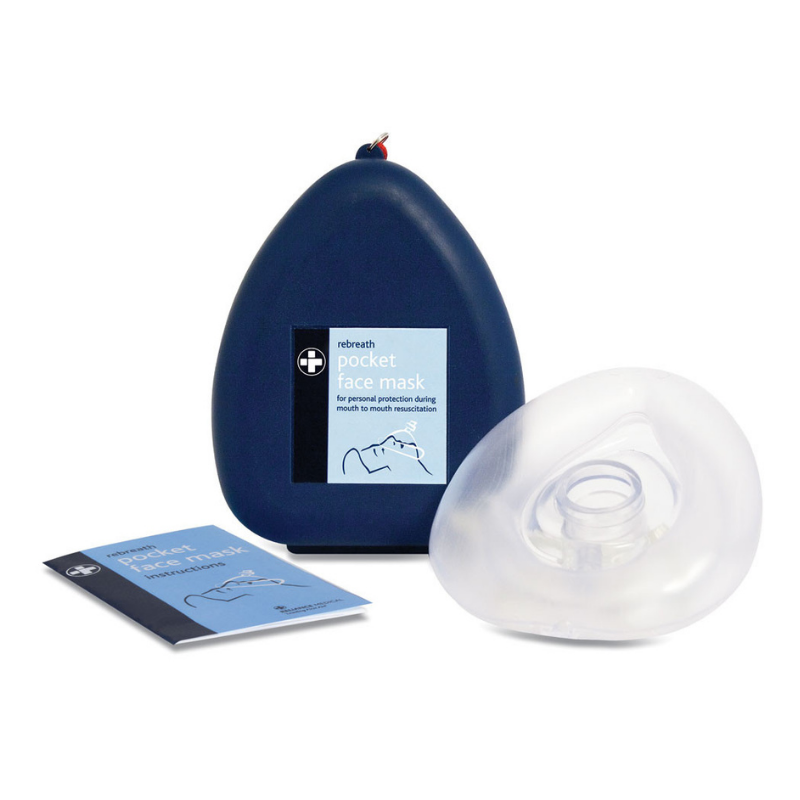
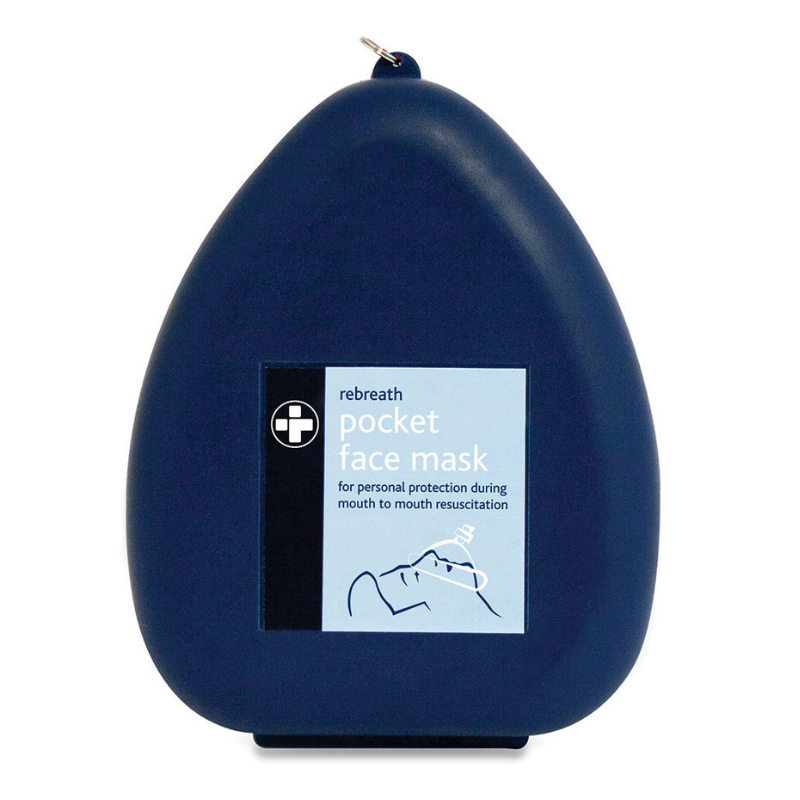
The Rebreath Pocket Mask is primarily designed for mouth-to-mouth ventilation of a non-breathing adult or child. The attached valve ensures that breath can be given with control and more accuracy and offers protection from cross-infection. This Mask is supplied in a durable blue clamshell case.
Uses
The Rebreath Pocket Mask is used to provide a barrier between the user and a casualty while giving mouth-to-mouth resuscitation.
Application
For an adult:
Priorities:
- Assess the situation – do not put yourself in danger
- Make the area safe
- Assess all casualties and attend any unconscious casualties first
- Send for help – do not delay
Check for a response:
- Gently shake the casualty’s shoulders and ask loudly: Are you all right?
- If there is no response, your priorities are to:
- Shout for help
- Open the airway
- Check for normal bleeding
- Take appropriate action
Follow the A, B, C’s:
A: Airway
- To open the airway, place your hand on the casualty’s forehead and gently tilt the head back
- Lift the chin with two fingertips
B: Breathing
- Look, listen and feel for normal breathing for no more than 10 seconds:
- Look for chest movement
- Listen at the casualty’s mouth for breath sounds
- Feel for air on your cheek
- If the casualty is breathing normally:
- Place in the recovery position
- Get help
- Check for continued breathing
- If the casualty is not breathing normally:
- Get help and call for an AED if available
- Start chest compressions
C: CPR
- To start chest compressions, lean over the casualty and with your arms straight, press down on the centre of the breastbone 5 – 6cm, then release the pressure
- Repeat at a rate of 100 – 120 times a minute
- After 30 compressions, open the airway again
- Apply the pocket mask
- Make sure that the airway valve is over the open mouth
- Blow strongly through the valve to inflate the casualty’s lungs and watch for the chest rising
- Give 2 breaths through the resuscitation aid and continue this process in a ratio of 30 compressions: 2 breaths until qualified help takes over, or the casualty starts breathing normally
For a child:
- Follow the above steps but use the heel of one hand on the breastbone when doing compressions.
- Continue this process in a ratio of 30 compressions: 2 breaths until qualified help takes over, or the child starts breathing normally.